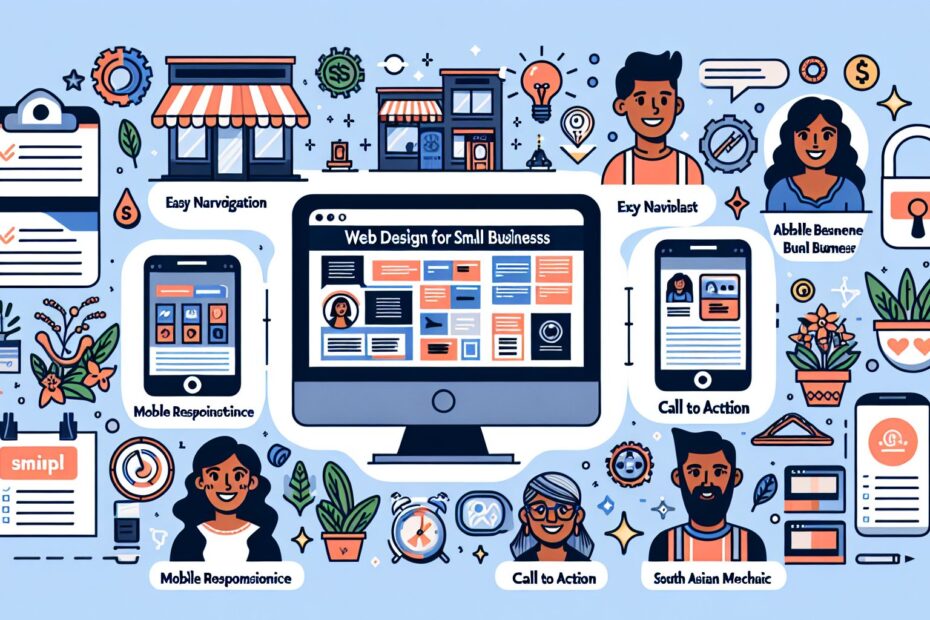
So you have a small business and you’re looking to establish your online presence? That’s great news! In this day and age, having a professional website is essential for any business, no matter how big or small. Your website is often the first point of contact for potential customers, so it’s important to make a good impression from the get-go.
But with so many web design options out there, it can be overwhelming to know where to start. That’s why I’ve put together some key tips for small businesses looking to create a website that is not only visually appealing, but also effective in driving conversions.
Keep it simple
When it comes to web design for small businesses, less is often more. Avoid cluttering your website with unnecessary bells and whistles that can slow down load times and confuse visitors. Instead, focus on clean, minimalist design that is easy to navigate and visually appealing. Stick to a simple color palette and choose fonts that are easy to read. Remember, the goal is to make it as easy as possible for visitors to find the information they need and take the desired action.
Mobile responsiveness is key
With more and more people accessing the internet on their smartphones and tablets, it’s crucial that your website is mobile responsive. This means that your site will adjust to the size of the screen it’s being viewed on, providing a seamless user experience across all devices. Not only does this improve user experience, but it can also boost your search engine rankings as Google now prioritizes mobile-friendly websites in its search results.
Call to action
Every page on your website should have a clear call to action (CTA) that prompts visitors to take the next step. Whether it’s signing up for your newsletter, making a purchase, or contacting you for more information, a well-placed CTA can significantly increase conversions. Make sure your CTAs are easy to find and stand out from the rest of the content on the page.
Showcase your products or services
Your website is your digital storefront, so make sure to showcase your products or services in a compelling way. Use high-quality images and clear, concise descriptions to highlight what sets your offerings apart from the competition. Consider including customer testimonials or case studies to build trust and credibility with potential customers.
SEO optimization
Having a visually appealing website is important, but it’s equally crucial to optimize your site for search engines. This means incorporating relevant keywords throughout your content, optimizing meta tags and images, and creating a user-friendly URL structure. By focusing on SEO, you can improve your visibility in search engine results and attract more organic traffic to your site.
Test and iterate
Once your website is live, don’t just set it and forget it. Regularly review your website analytics to see how visitors are interacting with your site, and make adjustments as needed. A/B testing different elements, such as CTAs, images, and copy, can help you identify what resonates most with your audience and optimize your site for maximum conversions.
In conclusion, web design for small businesses doesn’t have to be daunting. By keeping things simple, prioritizing mobile responsiveness, including clear CTAs, showcasing your products or services, optimizing for SEO, and continuously testing and iterating, you can create a website that not only looks great but also drives results for your business. Remember, your website is often the first impression that potential customers have of your business, so make it count!